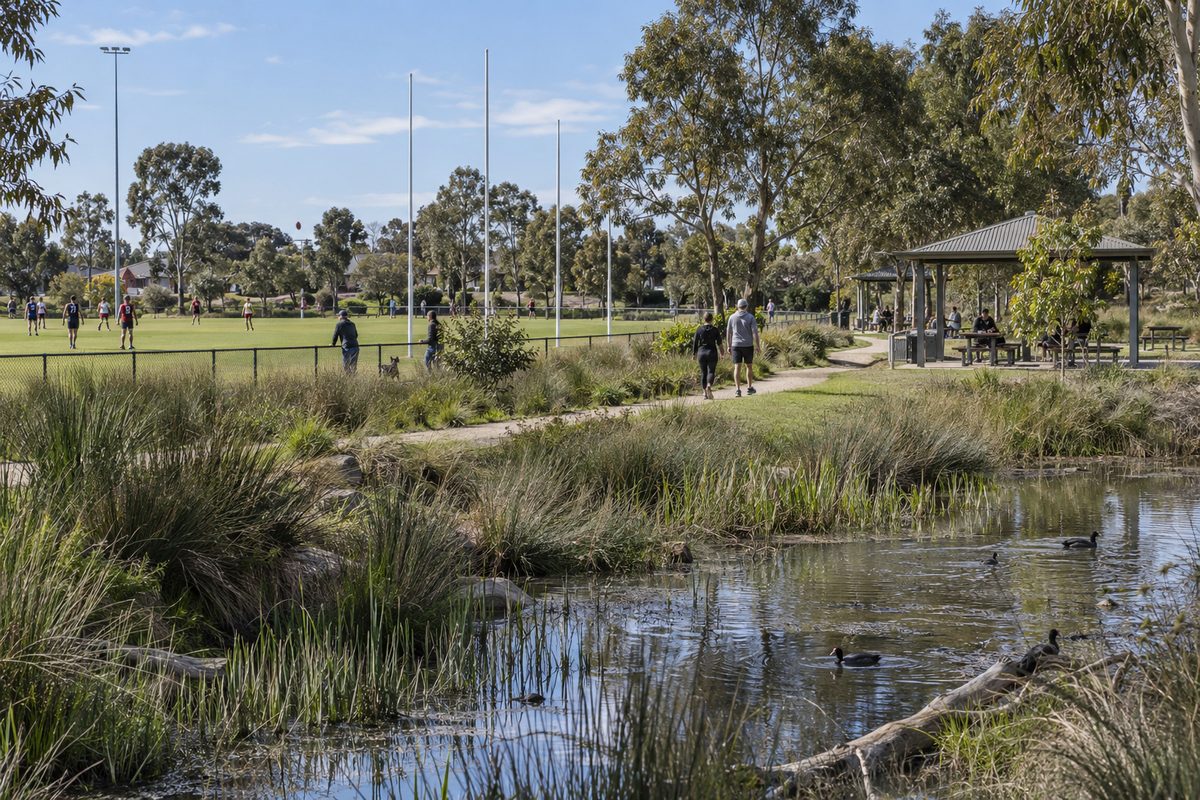
Thomastown East Recreation Reserve: Sport, Wetlands and Picnic Facilities
Thomastown East Recreation Reserve is a local green space in Thomastown, Victoria, where sports grounds, wetland edges and picnic areas share one site. That mix makes it a useful place for a weekend game, a slow walk or a family lunch outside. It is also a working piece of local infrastructure, because open space like this helps manage how water moves through a suburb.
Most people see a reserve as a place to kick a ball. I think that misses half the story. Here is how to use each part of the reserve well, and why the wetland side matters more than most visitors expect.
What Kind of Place Is This Reserve?
It is a multi-use public reserve in the north of Melbourne, managed under the City of Whittlesea. Reserves like this are built around a simple idea. One block of land should serve many people at different times of day.
Early morning belongs to walkers and dog owners. Afternoons and weekends belong to club sport and school-age players. Late afternoon and evening belong to families who want somewhere to sit outside without driving far.
If you are new to the area, our guide to Thomastown gives the wider suburb picture. This article stays on the reserve itself.
What Wildlife Will You See at the Wetland?
Shallow water with dense plants draws animals. A water bird is the most obvious sign that a wetland is working. Ducks and coots are common in suburban Victorian wetlands. Herons and egrets may stand still at the edges, hunting. Frogs often call after rain, and you may hear them before you see anything.
I remember when one of my clients, a retiree who walked the path daily, started keeping a notebook of what she saw. After a few months she could tell the seasons by the birds. Her point was that the wetland changed every week, and that was the reason she kept coming back.
A few habits help the wildlife:
- Keep dogs on a lead near the water so nesting birds are not flushed.
- Do not feed bread to ducks. It harms their health and fouls the water.
- Stay on paths so you do not trample the edge plants that filter the water.
How Do Sport, Wetland and Picnic Uses Fit Together?
They can clash, and they can help each other. Here is the honest picture.
Sport brings crowds, noise and wear on the grass. Wetlands need calm and protected edges. Picnic areas sit between the two and take the overflow of both. When the layout is well planned, ground fields sit away from the water, paths link the zones, and planting forms a buffer.
Hard-wearing sports surfaces also shed more water than bare soil, so they add to surface runoff during storms. A wetland downslope catches that extra flow. In that sense the sports ground and the wetland are partners. One creates runoff and the other cleans it.
This is the idea I wish more people grasped. A reserve is a system. Each part affects the next.
When Is the Best Time to Visit?
It depends on what you want, and here is the direct answer for each use.
- Quiet walk: weekday mornings, when the grounds are empty.
- Birdwatching: early morning or near dusk, when birds feed.
- Family picnic: Sunday late morning in warm months, when match traffic has eased.
- Watching local sport: Saturday, when fixtures run.
- Wetland at its fullest: a day or two after steady rain, when the basins are full and frogs are loud.
Avoid the wetland edge straight after a very heavy storm. Water levels rise, banks get slippery and the ground goes soft.
How Does the Reserve Fit Daily Life in Thomastown?
For residents it works as a shared backyard. Many homes in the area have small gardens, and a reserve gives people room to run, sit and meet neighbours. If you are weighing up the suburb, a Saturday here tells you a lot about its character. You will see clubs, families and walkers sharing the same ground. For a wider view of the suburb, see our guide on whether Thomastown is a good place to live.
If you want to place the reserve on a map first, our explainer on where Thomastown sits and which suburbs surround it covers the geography.
What Are Common Mistakes Visitors Make?
I see the same few slips again and again.
- Arriving at peak match time and then complaining about parking.
- Letting dogs run through the wetland edge.
- Leaving food scraps or wrappers behind.
- Assuming every facility is open at all hours.
- Ignoring signs about closed paths or fenced planting areas.
Each one is easy to avoid. Each one also affects the next visitor, and the water.
How Can You Help Look After It?
Small acts add up. Pick up litter even when it is not yours. Report dumping and damage to the council. Join a local friends group if one runs near you, since volunteer planting days are a good way to meet people and learn what is growing. When it rains, remember where the water goes. What lands on the ground often ends up in the creek.
When I tried joining a planting day myself, I was surprised how fast the work showed. A bare bank looked like a different place a few months later. It made me treat the whole site with more care.
Your Next Step
Plan one visit this week and use it with purpose. Here is exactly what to do:
- Check the City of Whittlesea website for current facility details and any booking or fixture information.
- Pick your goal: sport, a wetland walk or a picnic.
- Choose the matching time from the list above.
- Bring a bag, take your rubbish home and keep dogs on a lead near the water.
- Spend ten minutes at the wetland edge and watch for a water bird. You will see the reserve differently afterwards.
Thomastown East Recreation Reserve combines sport, wetlands and picnic facilities in a single local open space, where the water features do real work as well as adding scenery. A constructed wetland helps treat stormwater before it moves toward Merri Creek, so the reserve supports the health of the wider waterway while visitors use the fields and picnic areas. Bioretention features add to this, filtering runoff through planted soil and vegetation. Melbourne Water is the authority typically associated with waterway and drainage management in the region, which makes this kind of green infrastructure relevant to the reserve's role in the local catchment. Reducing water pollution in this way helps keep the surrounding environment cleaner for people who come to play, walk or relax.