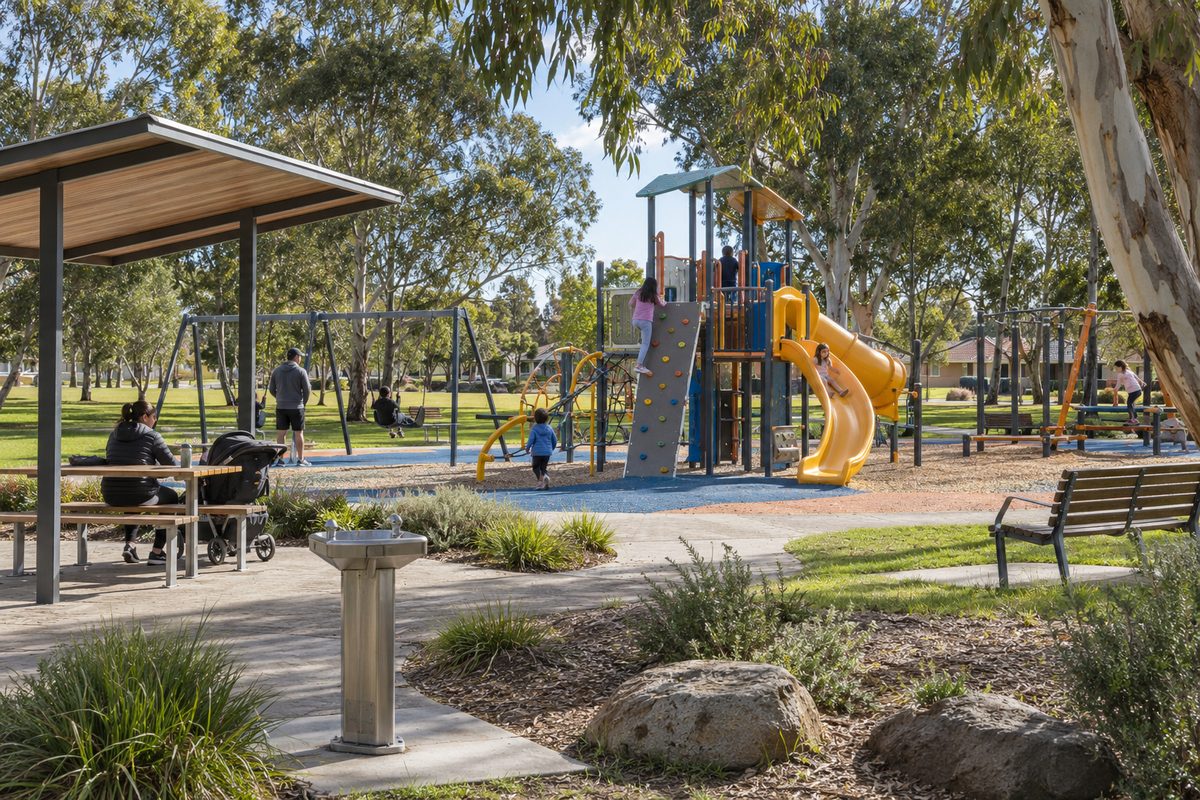
Parks and Playgrounds in Thomastown: Facilities and Locations
Thomastown has plenty of local parks and playgrounds, and most sit inside residential streets or beside the creek corridors that run through the area. The facilities vary from park to park, so the smart move is to know what to look for before you load the kids into the car. This guide shows you where parks tend to be, what each type offers, and how to check the details that matter.
I will not pretend every park has the same gear. They do not. What I can do is give you a simple way to find the right one for your family in about ten minutes.
Who looks after the parks in Thomastown, Victoria?
Most of Thomastown, Victoria sits inside the City of Whittlesea. That means the City of Whittlesea council maintains the local parks, playgrounds, paths and park furniture in most of the suburb.
This matters for one practical reason. If a swing is broken or a bin is overflowing, you report it to council, not to a random website. Council also publishes park information, and that is the place to confirm things like fencing, shade and equipment.
The western edge of the area is different. Parts of the creek corridor run close to the City of Darebin, so a path you follow on a walk may cross from one council area to another. You will not notice it on the ground. You may notice it when you report an issue and need to pick the right council.
One of my clients moved to the area with a toddler and spent weeks searching for the wrong council's contact page. Once she learned which council covered her street, every question got easier. Check your street first.
Where are the parks and playgrounds located?
The pattern is easy to learn. You will find three kinds of green space in and around Thomastown.
- Small neighbourhood parks tucked between streets. These often have a basic play set, a bench and open grass.
- Larger reserves with sports ovals, bigger play areas and more parking.
- Creek corridors with walking and riding paths, long grass areas and wildlife.
The small parks are the ones most families use daily. They are within walking distance of many homes, so you rarely need a car. The larger reserves suit weekend trips, team sport and birthday gatherings.
I know this because I watched a family I work with test all three in one month. They used the small park for after-school energy, the reserve for a Saturday kick-around, and the creek for a slow Sunday walk. Each did a different job.
How do the creek corridors fit in?
The Darebin Creek corridor is the main green spine on the western side. It gives you a long, mostly flat path that suits prams, scooters and beginner riders. Because it is a corridor and not a single park, facilities appear in spots along the route, not at every step.
The Merri Creek corridor sits further out. It is a good option if you want a longer outing and do not mind a short drive to reach it. Think of it as a day trip, not a five-minute stop.
Here is the thing most guides get wrong. A creek trail is not a playground. Do not promise a toddler a slide and then arrive at a path. Pick the creek when you want movement and fresh air. Pick a playground when you want equipment.
What facilities should you expect?
Expect the basics at most playgrounds: play equipment, seating and some open grass. Do not assume anything beyond that. Here is what to check, and why each one matters.
Public toilet access
A public toilet is the single most useful facility with young children. Small neighbourhood parks often have none. Larger reserves are more likely to have one, but opening times and cleanliness vary.
When I tried a new park with a four-year-old, the toilet was locked. We left within ten minutes. Now I check before I go, and I never rely on a toilet being there.
Drinking fountain
A drinking fountain is easy to overlook until a hot afternoon. Many small parks do not have one. Pack water for every visit and treat a working fountain as a bonus, not a given.
Shade and fencing
Summer sun here is strong. Metal slides get hot fast. Look for tree cover or shade sails over the play area. Fencing matters if you have a child who runs. Most neighbourhood playgrounds are open, and some sit near roads, so check the boundary before you let a toddler loose.
Cycling infrastructure
Good cycling infrastructure turns a park trip into a ride. The creek paths are the strongest option, and some reserves link to shared paths. If your child is learning to ride, look for a wide, flat, sealed path away from traffic. The creek trails usually fit that need better than a street.
How do you reach the parks without a car?
You can reach many parks on foot from nearby streets. For parks further away, public transport helps.
The Thomastown railway station, Melbourne area is a useful anchor. If you arrive by train station and want to let the kids burn off energy, walk or catch a short bus to the nearest green space. Check the route in advance, because distances look shorter on a map than they feel with a pram.
Main roads shape your trip as well. Plenty Road is a major route on the eastern side, and it is busy. Cross it only at proper crossings, and plan a route that keeps small children away from the heavy traffic. High Street is another busy road that many locals use to orient themselves. Use it as a landmark, then turn onto quieter side streets to reach the park.
One client did the school pick-up on foot and used a side-street route to a small park. Her kids played for 30 minutes, then they walked home before dinner. No parking stress, no traffic.
Which park suits which age group?
Match the park to the child. This saves you a lot of wasted trips.
- Babies and toddlers: Look for fenced or low-traffic parks with soft ground, low swings and shade.
- Primary school children: Look for climbing frames, slides, open grass and a path nearby for scooters.
- Teenagers: Look for ovals, courts or open reserves where they can kick a ball or ride.
Some small parks have equipment aimed at only one age band. If you have kids of different ages, a larger reserve usually serves everyone better.
What do parks look like beside shops and services?
A park combined with errands saves time. If you are heading to a shopping mall or the shops along High Street, plan the park visit first. Kids play, burn off energy, and the shopping trip goes smoother. Do the reverse and you often face a tired, grumpy child dragging through a store.
This sounds small. It changed my own weekends. When I tried the park-first order, my shopping took half the time because nobody was wired.
What do most guides miss about local parks?
Three words often get ignored. Time of day. The same park feels different at 8am, 3:30pm and 7pm. Early morning is quiet. After school it fills up. Evening is the time dog owners and sports clubs use the space.
Another missed angle is condition. Equipment gets worn, bins fill, and grass grows long between mowing. A park that looked great in a photo may feel tired in person. Always go and look, and report faults so council can fix them.
A third missed angle is the quiet park. Everyone talks about the large reserves. Few mention that the tiny park two streets from your home may be the best option because you will actually use it every day.
How do you find the right park fast?
Use a simple process. It takes ten minutes.
- Open the City of Whittlesea council park information and search for parks near your street.
- Pick two or three that look close and check their listed equipment.
- Look at a satellite map to see tree cover, roads nearby and path links.
- Visit at the time of day you plan to use it.
- Check for a public toilet, a drinking fountain and shade on that visit.
Do not skip the visit. A listing tells you what exists. A visit tells you what works.
What should you pack for a park visit?
Pack for what the park may not have. Bring water, sunscreen, a hat, a small first aid kit, hand wipes and a bag for rubbish. If your child rides, bring a helmet. If you are heading to the creek, bring closed shoes, because paths can have loose stones and uneven edges.
I learned this when a client's child scraped a knee at a park with no tap nearby. Wipes and a plaster solved it. Without them, the day ended early.
Your next step
Pick one park within a ten-minute walk of your home and visit it this weekend. Check four things: toilet, water, shade and fencing. Write them in your phone. Then choose one larger reserve or creek path for a longer trip next weekend. In two weeks you will have a short list of parks you trust, and you will stop guessing.