Mopa Thomastown: Ages, Activities, Accessibility and Planning Your Visit
Mopa Thomastown is an indoor play venue built for young children, and it works best for babies through early primary school ages. Older kids can still enjoy it, but they will tire of it sooner. Confirm the exact age zones, opening hours and prices with the venue before you leave, because these details change. The rest of this guide helps you decide if it suits your family and how to make the visit easy.
This article covers the visit itself. If you are still working out where the suburb sits, our guide to where Thomastown, Victoria is covers the map. If you are weighing a move, see whether Thomastown is a good place to live. You can also start from the main Thomastown guide.
Who Is Mopa Thomastown Really For?
It is for families with small children who need to burn off energy indoors. That is the core audience.
A baby can enjoy the soft, low areas and the noise and movement around them. A toddler gets the most from it, because toddlers want to climb, crawl and explore with no one saying no every ten seconds. A child in the early school years can run around freely and play with other kids.
The audience thins out as children grow. In my experience, a ten-year-old will say it is for little kids within about thirty minutes. If your family has a wide age gap, plan for the older child to want something extra afterward.
One of my clients had a four-year-old and an eleven-year-old and assumed one play venue would suit both. The eleven-year-old sat on a bench with a phone. The fix was simple: she promised the older one a bike ride or a treat afterward, so the trip felt like a shared day and not a chore.
Which Age Group Gets the Most Out of It?
The sweet spot is roughly two to six years old. That is where a play venue pays off the most.
Younger than that, you will be right beside your child the whole time. That is fine, but you will be climbing, bending and lifting. Older than that, kids need more challenge than a play structure usually offers.
Check how the venue splits its space. Many play centres give babies and young toddlers a separate soft area, away from bigger kids who run fast and do not look where they go. That separation matters more than any single attraction. When I tried this kind of venue with a small child, the quiet baby zone made the whole trip calmer for everyone.
What Will Your Child Actually Do There?
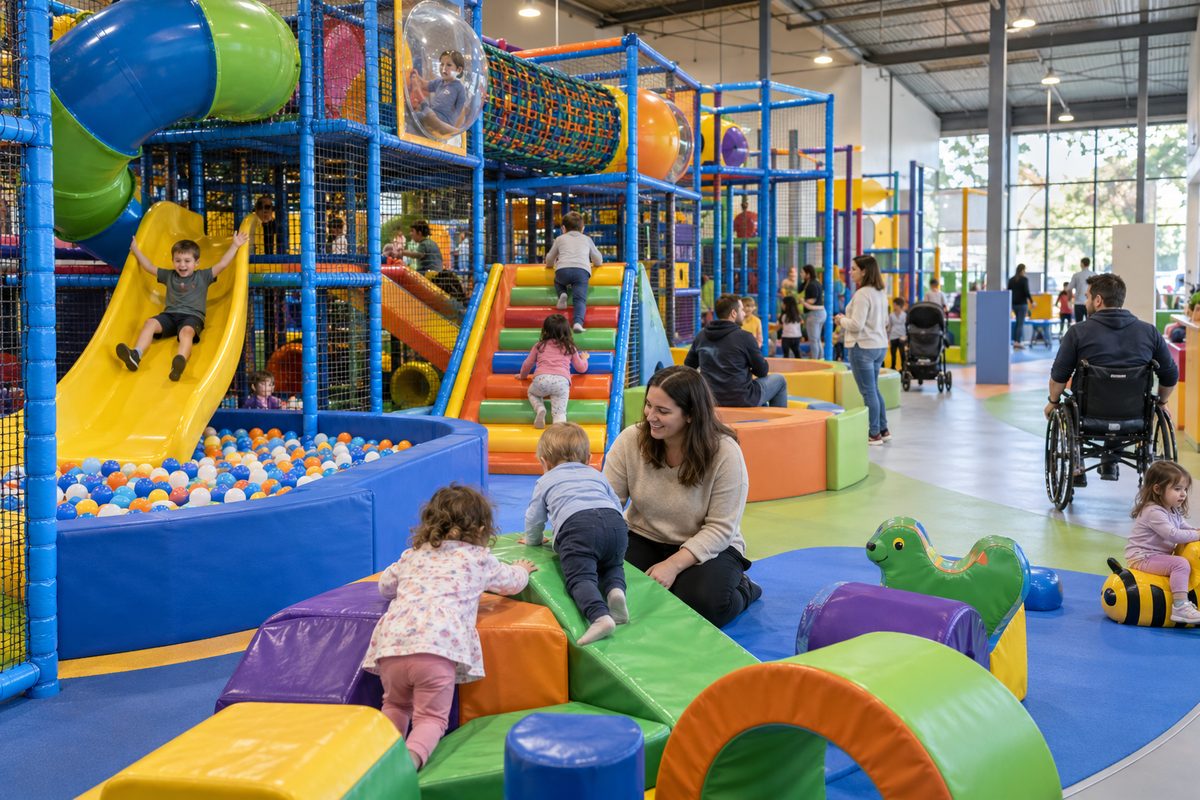
Expect climbing frames, slides, soft play and a ball pit. Those are the staples of a venue like this, and they are what most children head to first.
A ball pit is the big draw for many children. It also has a catch. Toddlers love it, and the balls get everywhere. Wear socks if the venue requires them, and keep a close eye on very small children, who can get buried or lose you in the crowd.
Here is what I tell parents to look for when they arrive:
- A soft area where the youngest children can move at their own pace.
- Climbing and sliding features that match your child's height and confidence.
- A clear line of sight from where you will sit, so you can watch without hovering.
Walk the space for two minutes before you let your child loose. Find the exits, the toilets and the quiet corner. This habit saves you from a panicked search later.
How Do You Manage a Toddler and an Older Child at the Same Time?
Split your attention in blocks. Do not try to watch both at once.
Start with the toddler. Settle them into an activity, then check on the older child. Pick a seat that gives you a view of both areas. If you can only see one, you will spend the whole visit walking back and forth.
I know this because a client of mine tried to sit near the toddler zone while her six-year-old played on the far structure. She could not see him and kept leaving her toddler to check. Moving her bag and her seat to a spot between the two zones fixed it in five minutes.
If two adults come, divide the job. One adult takes the toddler. The other floats. Swap halfway so neither of you gets stuck in the ball pit all day.
Is Mopa Thomastown Accessible for Wheelchair Users and Prams?
Many modern play venues are built on one level with wide entries, but you should confirm access before you go. Call ahead and ask direct questions. Do not assume.
For a wheelchair user, ask about step-free entry, door widths, accessible toilets and parking close to the entrance. Ask whether the play floor itself can be reached by wheelchair, and whether there is seating at the same height for a parent who uses one. The play structures themselves are often not wheelchair accessible, so ask what a child with limited mobility can do there and how staff can help.
For baby transport such as prams and strollers, ask where to park them. Some venues have a storage area. Others expect you to leave the pram by the door or carry the baby in. A baby carrier solves this and keeps your hands free, so pack one if you have it.
Children with sensory needs can find a busy play centre loud and bright. Ask which times are quietest, and whether the venue offers a calmer session. Many parents learn the hard way that a Saturday afternoon is the worst slot for a child who is easily overwhelmed.
How Do You Get There From Melbourne?
Thomastown sits in Melbourne's northern suburbs, so most families drive. Check the venue's address, then use a map app to find the route from your starting point.
Parking is the first thing to sort out. Look for the car park nearest the entrance, and arrive a little early on busy days. If you are traveling with a pram and a small child, a park close to the door saves a lot of effort.
A bus is possible if you do not drive. Look at the bus routes serving Thomastown and check where the nearest stop sits relative to the venue. Then count the walk. A ten-minute walk is easy for you and hard for a tired toddler on the way home. Plan to carry them or bring the pram.
The train is another option for getting into the area, but you will probably need a bus or a walk for the last stretch. Work out the whole trip before you leave, with times for each leg. A journey that looks short on a map can feel long with a child who needs a nap.
When Is the Best Time to Go?
Go on a weekday morning if you can. It is usually quieter, the space is cleaner and your child gets more room to play.
Weekends and school holidays draw the biggest crowds. During a school holiday, the venue can feel packed, noisy and hot. If you must go then, arrive when the doors open, play for a couple of hours and leave before the afternoon rush.
Time your visit around your child's rhythm too. A hungry or sleepy toddler will melt down fast. Go after a meal and a nap, not before. What I found was that a well-rested child plays for twice as long and leaves happier.
Check opening hours and any session times before you set out. Some venues run timed sessions or limit numbers, and arriving without checking can mean a long wait or a turned-away family.
What Should You Pack?
Pack light, but pack the right things.
- Socks for you and your child, since many play areas require them.
- A water bottle and a small snack that will not make a mess.
- A change of clothes for a young child.
- Wipes and hand sanitiser.
Leave valuables in the car or keep them on you. A crowded play area is not the place to leave a wallet on a bench.
Check the venue's food rules. Some allow outside snacks and others do not. Many have a cafe where you can buy a coffee while the children play. That coffee is often the reason a parent enjoys the visit as much as the child does. Take a few minutes to sit, drink it and watch your kid have fun.
How Much Should You Budget?
Look up current prices on the venue's own website or by phone. Prices change, and old figures online are often wrong.
Ask about the pricing rules. Some venues charge per child and let parents in free. Others charge adults too. Many offer different prices for babies, for toddlers and for older kids. Ask about sibling deals, multi-visit passes and any discount for a family with a concession card.
Add the extras to your budget before you go. Parking, food and a coffee can add as much as the entry fee. Decide up front what you will buy, so you do not get talked into a treat for each child.
How Does It Fit Into a Holiday Day Out?
It fits well as a half-day anchor. Play for two hours, then do something else.
A holiday day works best with a simple shape. Go to the play venue in the morning when your child has energy. Eat lunch nearby. Then finish with a park, a short walk or a quiet afternoon at home. That rhythm keeps children from hitting the wall.
If you visit Thomastown from elsewhere in Melbourne, look at what else is close by before you plan the day. A short stop at a local park or cafe can turn a single outing into a pleasant day. If you are visiting for a longer holiday and staying nearby, a play centre is also a reliable rainy-day plan. Keep it in your pocket for the days when the weather turns.
What Do Most Parents Get Wrong?
They treat it as a place to drop the child and scroll a phone. That works for older kids but fails for toddlers, who need an adult close by for safety.
They also go at the wrong time. A packed Saturday afternoon is the hardest version of the visit, and parents then blame the venue. Try a quiet weekday and the same place feels very different.
Finally, they skip the call. A two-minute phone call about access, age limits and session times prevents most bad surprises. I have seen families drive across Melbourne and then find the session full. A call would have solved it.
Your Next Step
Pick one quiet weekday, call the venue and ask four things: the age zones, the access for wheelchair users and prams, the current prices and the quietest session. Write the answers down, pack your bag the night before, and plan a coffee while your child plays. Then go, and watch how your child responds. That first visit will tell you if it becomes a regular stop.