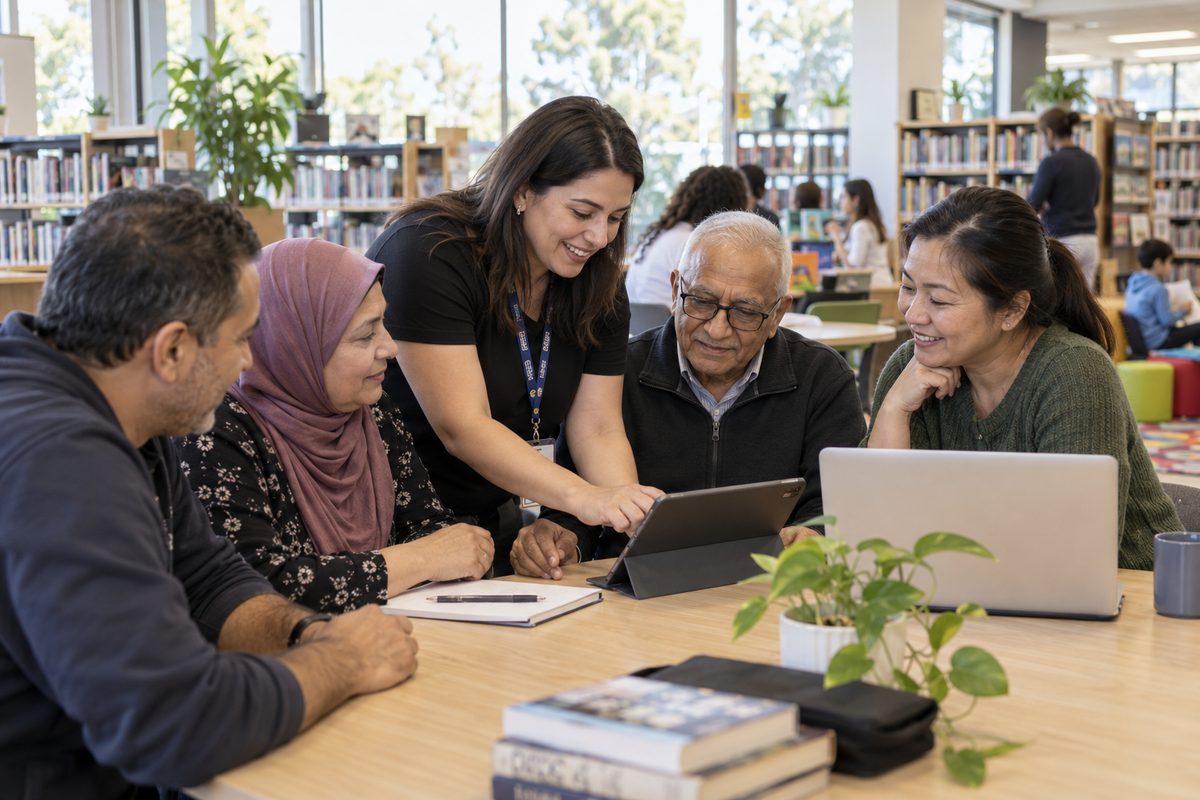
Thomastown Library and Neighbourhood House: Activities, Learning and Community Services
Thomastown Library and the neighbourhood house give you a free, local place to borrow, learn, meet people and get practical help, all within the same community hub. Most residents use only one half of it. They borrow a book and never see the class timetable, or they join a class and never realise the library card gives them more. This guide shows what each side offers, how they work together, and how to start without feeling lost.
The hub sits in Thomastown, Victoria, in the north of Melbourne, and falls under the City of Whittlesea. That matters because the council runs the library network, while the neighbourhood house runs on its own community-based model. Different funders, different rules, one shared set of doors.
What Is the Difference Between the Library and the Neighbourhood House?
The library lends things and gives you space. The neighbourhood house teaches things and connects people. That is the simplest way to separate them.
The library is a council service. You get books, magazines, DVDs, e-resources, public computers, printing and quiet study seats. Staff help you find information, and children's programs run through the week.
The neighbourhood house is a community organisation. It runs classes, social groups, workshops and support programs. It is part of a state network, and Neighbourhood Houses Victoria is the peak body that represents those houses across the state. Houses in that network share a common goal: open local doors to people who want to learn, volunteer or simply belong.
One of my clients moved to the area with a toddler and no local friends. She thought the library was only for books. A staff member pointed her to a weekly group next door. Six weeks later she knew more neighbours than she had in the two years before. She did not need a plan. She needed someone to say the second door existed.
What Can You Do at Thomastown Library?
Start with the basics, because they save real money.
- Borrow books, audiobooks and magazines with a free membership.
- Use e-books and online databases from home on your own device.
- Print, scan and copy at low cost.
- Book a public computer when you do not have one at home.
Then look at the extras. Libraries in the City of Whittlesea run children's story and rhyme sessions, school holiday activities, author talks and local history events. Programs change each term, so check the council's library page or ask at the desk for the current timetable. Do not rely on a flyer from last year.
The library also acts as a quiet room for people who cannot get quiet at home. Students use it before exams. Remote workers use it when the home internet drops out. A shared household with five people in a small flat often has no calm corner, and a library table fixes that for free.
What Does the Neighbourhood House Offer?
Think of it as a community school without the pressure. Classes are short, friendly and pitched at adults who may not have studied for years.
The typical mix at a neighbourhood house includes language classes, computer skills, craft and creative groups, cooking, fitness for older adults, parent groups and volunteer opportunities. Exact offerings shift with funding and demand, so confirm what is running before you travel.
Costs are usually low. Some programs are free, some charge a small fee to cover materials, and concession rates often apply. Ask about the rate before you assume you cannot afford it. In my experience, people skip courses they could easily pay for because they never asked the price.
How Does It Support Lifelong Learning?
Lifelong learning sounds grand, but here it means one thing: you can pick up a skill at any age without sitting a formal exam. A retired person learns to use a tablet. A parent returns to study after years at home. A new arrival practises everyday English at a pace that works.
Neighbourhood houses also sit inside the wider Adult Community and Further Education sector, often shortened to ACFE. This is the Victorian system that funds community-based adult learning. It matters because it explains why some courses at a house lead to a recognised pathway. A short class can be a stepping stone to a certificate, a TAFE course or a job.
When we sat down with a man in his fifties who had left school early, he wanted to retrain but felt too embarrassed to enrol anywhere. He started with a basic class at a house. The room had other adults in the same position. Nobody judged anyone. Within a year he had enrolled in a formal course. The low-stakes first step did the heavy lifting.
Where Do You Learn English?
If English is not your first language, this is one of the most useful parts of the hub. English as a second or foreign language classes help you build speaking, reading and writing for daily life: doctor visits, school forms, job interviews, phone calls with the bank.
Classes at community level are different from a university course. They are slower, more practical and more social. You practise with real tasks, like reading a bill or booking an appointment. You also make friends who share your situation, which often does more for your confidence than the lesson itself.
Two tips make a big difference. First, ask which level the class suits before you enrol, so you do not sit in a room that is too hard or too easy. Second, attend consistently. I know this because one of my clients missed three weeks, felt behind and almost quit. Once she went back, the group welcomed her and she caught up in a fortnight.
Can You Build Digital Skills There?
Yes, and many people need to. Digital literacy now decides whether you can book a GP, apply for a payment, pay a rates notice or talk to your grandchildren overseas.
The library and the house cover different parts of the gap. The library gives you equipment and access: computers, printing and free Wi-Fi. The house gives you teaching: how to set up an email account, how to spot a scam message, how to use a government portal, how to attach a document.
Bring your own phone or laptop if you have one. You learn faster on the device you will use at home. If you do not own one, ask whether the program provides devices during class.
A practical warning: do not use public Wi-Fi for banking unless you know the network is secure. The library's connection suits browsing and study. For anything involving passwords or money, use your mobile data or your home connection. A staff member or tutor can show you how to check.
What About Community Gardening?
Community gardening is the activity most people do not expect from a library and neighbourhood house. Many houses across Victoria run garden groups, because gardens bring together people of different ages and backgrounds who might never otherwise meet.
A garden group does something a classroom cannot. You work side by side, and talking comes easily when your hands are busy. People swap seeds, recipes and stories. Older residents pass on skills. Younger families pick up a free source of fresh herbs and vegetables.
If a garden program is running when you visit, ask how plots or sessions work. Some are drop-in, some need a booking, and some have a waiting list. Ask early, since popular spots fill.
How Do You Join and What Does It Cost?
Joining the library is free for residents. Bring photo ID and proof of your address. Ask staff if you do not have standard documents, because they can often suggest alternatives.
Joining the neighbourhood house is usually a small step. Expect to fill in a short enrolment form and possibly pay a modest membership or class fee. Concessions are common. Some programs are free because a funder covers the cost.
Here is a simple first-visit sequence:
- Walk in during opening hours and pick up the current program guide.
- Join the library and ask staff what runs this term.
- Speak to a house coordinator about the class you want and the price.
- Book one session only. Do not commit to a full term on day one.
What Do Most People Get Wrong?
They treat the hub as a place for someone else. A common belief is that the neighbourhood house is only for older people, or only for newcomers, or only for people who are struggling. None of that is accurate. Houses serve whoever walks in: students, parents, workers on a day off, retirees and people who just want a coffee and a conversation.
The second mistake is waiting for the right moment. People tell themselves they will join once life calms down. Life rarely calms down. One of my clients waited two years to join a group, then said the only thing she regretted was the wait.
The third mistake is using the services in isolation. The strongest results come from combining them. Borrow a language book from the library, then practise in a class. Learn a skill in a workshop, then use the library computers to apply it. Join a garden group, then borrow a gardening book to solve a problem you met in the beds.
How Does This Fit Life in Thomastown?
For a suburb with a mix of long-term residents and newer arrivals, the hub works as shared ground. It is one of the few places where a retiree, a new migrant family and a university student can sit in the same room without any of them feeling out of place. If you want a picture of the wider suburb, the guide at The Thomastown Guide covers daily life, and you can read how the area rates for families in our piece on living in Thomastown.
Residents of neighbouring areas, including those who search for Whittlesea, Victoria services, often find that the council network lets them use library resources across several branches. Ask staff how the borrowing system works across locations, since it can save you a trip.
Your Next Step
Pick one thing and do it this week. Do not try to use everything.
- Join the library and borrow one book or audiobook.
- Ask at the neighbourhood house for the current class list and the concession price.
- Choose a single program that matches a real need: English, computers, a garden group or a social session.
- Attend the first session, then decide whether to continue.
That is all it takes. The doors are open, the staff want to help, and the first visit is always the hardest one.