Getting from Thomastown to Melbourne Cbd: Train, Bus and Driving Options
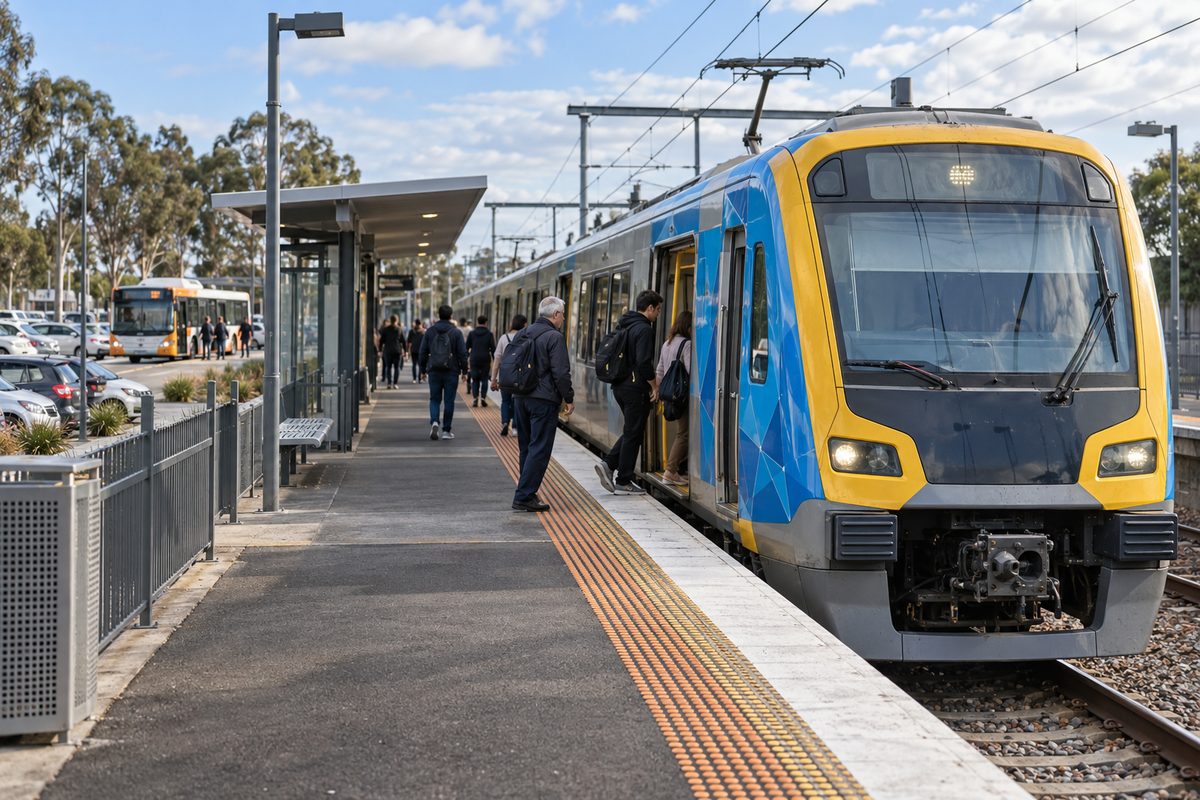
The train is the best way to get from Thomastown to the Melbourne CBD for most people, taking roughly 30 minutes to Flinders Street with no traffic risk. Driving can match that time late at night or on weekends, but peak hours and city parking usually erase the advantage. Buses fill the gaps, mostly as a feeder to the station. Here is how each option works, what it really costs you, and how to choose.
The Melbourne central business district sits about 15 kilometres south-west of Thomastown, Victoria. That distance sounds short. The trip is not always short, and the gap between a good commute and a bad one comes down to a few details most guides skip.
How Do You Get to the Station in the First Place?
The first kilometre decides whether the train feels easy. You have four ways to solve it.
- Walk. If you live within 10 to 15 minutes of the station, walking is the cheapest and most reliable choice.
- Bus. Local buses connect streets across Thomastown to the station and to Northland and Reservoir. Time your walk to the bus stop with the timetable, not with your hopes.
- Park and ride. The station car park is free, but it fills early on weekdays. Arrive before 8am or have a backup plan.
- Bike. Secure bike storage at the station makes cycling to the platform a strong choice in dry weather.
I know this because a client tried park and ride and kept arriving at 8:40. Every day she circled for a spot, then missed her train. She switched to a 10-minute bus ride, spent a little less time stressed and never missed a connection again. Park and ride only works if you get there early.
Is the Bus a Real Alternative to the Train?
Not as a stand-alone option for the CBD. Buses in the Thomastown area mainly feed other services. A bus that runs door to door into the Hoddle Grid would sit in the same traffic as cars and take far longer than the train.
Buses earn their place in three situations. You live far from the station. You are travelling to a suburb that the train does not reach, such as places east or west of the corridor. Or the train network is down and you need a fallback.
A bus plus train trip counts as a single journey on myki within the time window, so you do not pay twice. Tap on at the bus, tap on again at the station if needed, and check the balance before you leave.
In my experience, the best bus users plan around the weakest link, which is the wait for a bus that comes every 20 to 30 minutes. Check the live timetable on your phone before you leave the house. Do not rely on memory.
Can You Ride a Bike Into the City?
Yes, and it is more practical than most people think. The ride is around 15 to 18 kilometres, which suits a confident commuter on a decent bike. Expect roughly 50 to 70 minutes, depending on your fitness and the route you choose.
The best approach uses off-road trails where possible. Creek paths and shared trails keep you away from traffic. Where you must use roads, a painted Bike lane is better than nothing, but check how it ends. Many of them disappear at the exact intersection where you need them most.
The smart hybrid is to ride one way and take the train the other. Bikes are allowed on Metro trains outside the busiest peak flows, and you do not need a ticket for the bike. When we helped a client plan this, he rode in on dry mornings and took the train home when he was tired. He cut his driving to nearly nothing and said he felt fitter within a month.
Which Option Fits Your Situation?
Match the method to your daily pattern, not to the best-case scenario.
- Standard 9 to 5 in the CBD: train, with a walk or bus to the station.
- Early or late shifts: drive, or use the train outbound and a rideshare home if services thin out.
- Working near the north end of the grid: check the loop stops first, since Parliament or Melbourne Central may be closer than Flinders Street.
- Tight on money: train plus walking, with the myki cap working in your favour.
- Want exercise built in: cycle to Reservoir or the CBD and train the rest.
What Do Most People Get Wrong About This Trip?
They compare the best drive with the worst train. Then they pick the car and learn the truth in the first month.
Three false beliefs show up again and again. The first is that Flinders Street is the only stop that matters. For many workplaces, the loop stations are far closer. The second is that living close to a freeway means a fast drive. The ramp may be near, but the queue on the other side decides your time. The third is that park and ride is free in every sense. It is free in dollars, but it costs time if you arrive late.
Another overlooked point is the pull of the neighbouring stations. Some people drive to Epping, Victoria, because it has more parking, then take the train from there. Others go the opposite way and board at Reservoir for a different service pattern. Both can work. Test them for a week before you commit.
How Do You Test Your Commute Before You Commit?
Do a trial run in real conditions. A Sunday drive tells you nothing about Monday at 8am.
Pick two weekdays at your actual start time. Take the train one day and drive the other. Record door-to-door time, not just the ride. Include the walk, the wait and the parking hunt. I did exactly this before one of my own moves, and the drive that looked 30 minutes on a map took 58.
If you are weighing up a move, this test is worth more than any suburb brochure. The commute shapes your day more than the size of the lounge room.
Your Next Step
- Open a journey planner and enter your real workplace address and start time.
- Time the walk or bus to Thomastown station on a weekday morning.
- Ride the Mernda line once at peak and note which loop stop is closest to your door.
- Drive the same trip once, and add parking to the cost.
- Keep the option that wins on total time and cost, then set up myki auto top-up so it never slows you down.
From Thomastown railway station, Melbourne, Metro Trains Melbourne services run on the South Morang line towards the city, and the trip ends at Flinders Street, Melbourne, with the Metro Tunnel changing how some cross-city connections work. Drivers can head south on the Hume Highway or use the M80 Ring Road to reach inner-city routes, though they should allow for traffic and the possibility of a Level crossing delay. Reservoir, Victoria is a nearby stop on the same corridor, which makes it a useful reference point when comparing train, bus and driving options.