What Is Westgarthtown? Exploring Thomastown’s German Settlement
Westgarthtown is the name of a nineteenth-century farming settlement, founded by German migrants, that sits across today’s Thomastown and Epping in Melbourne’s north. It is one of the best-preserved examples of German settlement in Australia within the Melbourne area. The settlers built farms, a church and a cemetery, and parts of that world still stand. You can walk through them today.
This article explains who the settlers were, why they left Europe, how the community lived, and what you can still see. It does not retell how the suburb got its name or where it sits on the map. Those stories are covered elsewhere on this site. Here, the focus is the people behind the Westgarthtown name.
Where Exactly Did Westgarthtown Sit?
Westgarthtown was never a formal town with a main street and a town hall. It was a cluster of small farms. Families worked narrow blocks of land and lived close together, as many European villages did.
The area covers parts of Thomastown, Victoria and Epping, Victoria. Over time, the boundary between the two became a line on a map rather than a line in the community. The families shared one church, one school tradition and one set of surnames. Today the heritage story is split between the two suburbs, but it is one story.
A common mistake is to think of Westgarthtown as a lost suburb. It is not lost. The suburbs grew over it, and the farmland turned into houses, factories and roads. A few key places survived, and they now carry the memory.
Who Was William Westgarth?
William Westgarth was a Scottish-born merchant who became a prominent figure in early Melbourne. He wrote about the colony, sat in public life and took an interest in bringing skilled farming families to Victoria. His name was attached to the settlement because of his link to the migrant effort.
Here is the point most articles miss. Westgarth did not live in the settlement or farm the land. His name is a label from the outside. The people who built the place were the German families, and their names are the ones that run through the local records.
When you read about Westgarthtown, keep that split in mind. The name belongs to a Melbourne figure. The community belongs to the settlers.
Why Did the Settlers Leave Germany?
Many of the founding families were Old Lutherans. They came from regions in the Prussian territories and held to a traditional form of Lutheran Worship. The Prussian state had pushed to merge Lutheran and Reformed churches into one state church. The Old Lutherans refused. They wanted their own services, their own liturgy and their own clergy.
That refusal had a cost. Families faced fines, pressure and restrictions on how they could worship. Historians describe this as Religious persecution, and it drove thousands to look for a new home. Australia, and South Australia first, became one of the destinations. Victoria followed in the 1840s and 1850s as the new colony grew.
The lesson is simple. These were not wandering adventurers. They were farming families who wanted to keep their faith and raise their children in it. Land mattered, but worship came first.
How Did the Community Take Shape?
The families settled on land north of Melbourne and began to farm. Good soil, close access to the city market and a shared language made the location practical. They grew crops and sold them in Melbourne. Over time they built houses and outbuildings using the methods they knew from home.
The German language was the daily language. People spoke it at home, in church and with neighbours. Services were held in German. Hymn books and Bibles were in German. A child could grow up in Westgarthtown and hear very little English before school age.
I know this pattern from talking with families who work on their own local history. One client told me her great-grandmother never lost her accent, even after sixty years in Victoria. She said the family kept German recipes and German hymns long after the farm was sold. That detail is small, but it shows how language carried identity across generations.
What Is the Westgarthtown Lutheran Church and Cemetery?
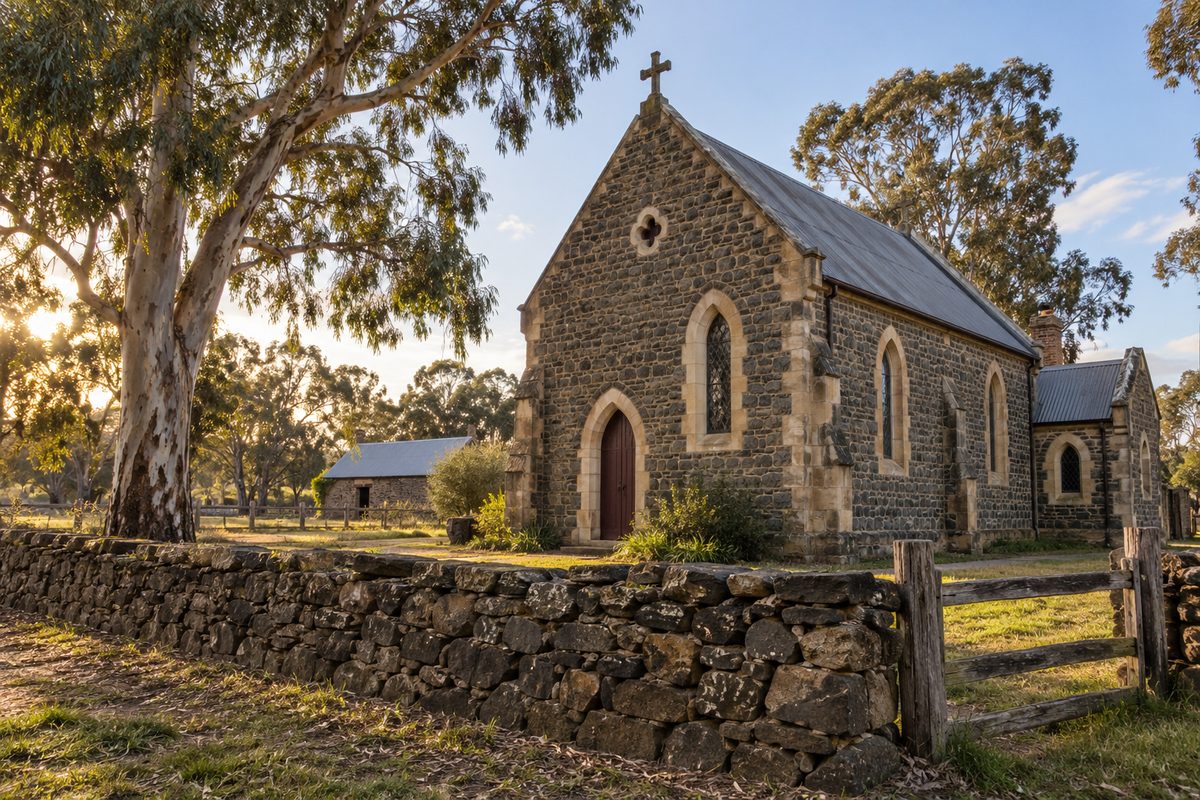
The Westgarthtown Lutheran Church and Cemetery is the spiritual heart of the settlement. The church gave the families a place to worship in the form they had fought to keep. The cemetery holds the graves of the early settlers, often marked with German inscriptions.
Walk the cemetery and you can read the community in stone. Surnames repeat. Family plots sit side by side. German text on older headstones gives way to English on later ones. That change is a record of cultural assimilation in physical form.
If you only visit one place to understand the settlement, make it this one. The site is small, but it explains more than a long book can.
How Did War Change Life for the Settlers?
For decades the families lived as respected farmers. Then the First World War arrived, and everything shifted. Anti-German sentiment swept across Australia. People with German names faced suspicion, hostility and pressure to prove their loyalty. Some had been born in Australia. It did not matter.
German-language services came under strain. Families dropped German at home to protect their children. Some changed spellings of surnames. Many stopped speaking the language in public altogether. Within a generation, the language that built the settlement was fading.
This is the part that gets glossed over. Assimilation in Westgarthtown was not only a gentle process of blending in. Fear pushed it along. When I looked at how families describe this period, the same theme kept coming up. They did not stop speaking German because they wanted to. They stopped because it became unsafe to be heard.
What Is the Westgarthtown Heritage Precinct?
The Westgarthtown Heritage Precinct is the area recognised for its surviving buildings, landscape and historical value. It brings together several sites linked to the original settlement, instead of treating each building as a separate curiosity.
Precinct status matters because it shapes what can happen to the land. A Heritage Overlay is a planning control used by local councils in Victoria. It means that changes to a listed property, such as demolition or major alterations, need a planning permit. The goal is to stop historic buildings from being lost by accident or neglect.
Some of the sites also come under the state-level register run by Heritage Victoria. That body keeps the Victorian Heritage Register and sets rules for places of state significance. Local overlays and state listings work side by side, and a single site can have both.
If you own a property near the precinct, check the overlay before planning any building work. A quick look at the council planning maps will tell you whether a permit is required. That one step can save you months of delay.
What Can You Still See Today?
You can still visit several places that tie directly to the settlers. The church and cemetery are the clearest. Early farmhouses and related buildings form the rest of the picture. Some are open at set times, often through local volunteers and historical groups.
A visit works best if you plan it in this order:
- Start at the church and cemetery to see the names and the faith that drove the move.
- Visit a surviving farmhouse to see how a family lived and worked the land.
- Walk the surrounding streets and notice how modern Thomastown wraps around the old farm blocks.
Check opening times before you go. Many heritage sites run on volunteer hours, and doors are not always open.
What Do Most People Get Wrong About Westgarthtown?
Three myths come up again and again. I will take them one by one.
Myth one: it was a big town. It was not. It was a farming community made up of a modest number of families. Its importance comes from what it preserved, not from its size.
Myth two: the settlers vanished. They did not. Their descendants stayed in Victoria, moved into other trades and spread across Melbourne. Many carry the same surnames today.
Myth three: the story is only about farming. Farming paid the bills. Faith is why they came. If you remove worship from the story, the whole settlement stops making sense.
Why Does Westgarthtown Matter to Thomastown Today?
Thomastown is known now for industry, transport links and a mix of cultures. Westgarthtown reminds you that migration is not a new chapter here. It is the base of the suburb’s story. Each new wave of arrivals follows a path that the German families walked first.
It also shows how a small community can hold its identity under pressure. The settlers kept their faith through persecution in Europe. They kept their families together through hard farming years. They then faced suspicion during wartime and still stayed. That is a story worth knowing, whether you live in the area or just pass through.
One of my clients, who grew up near the old farmland, told me she only learned about the settlement as an adult. She said she had driven past the cemetery for years without knowing what it was. After one visit, she said the whole suburb looked different. That reaction is common. The history sits in plain sight, and one afternoon is enough to see it.
How Can You Explore It Yourself?
You do not need special access. Public records, council heritage listings and local historical groups all hold material. Start with the council’s heritage information, then look at the state register for listed sites. Cemetery records and church histories fill in the family detail.
Read the German inscriptions slowly. Look for how the language changes from one headstone to the next. That single shift tells you more about assimilation than any summary can.
Your Next Step
Pick one afternoon this month and visit the Westgarthtown Lutheran Church and Cemetery. Walk the rows, read five headstones, and note which are in German and which are in English. Then check the council planning map to see which nearby properties sit under a Heritage Overlay. In one visit, you will understand what Westgarthtown is, and you will see how much of Thomastown’s story still stands.
Westgarthtown, Victoria, is the name given to the early German settlement in Thomastown, in Melbourne's north, where Lutheran immigrants established farms in the 1840s. The settlement shaped the area's early farming community and its church life, and traces of that heritage still help explain how Thomastown developed from rural land into the suburb it is today.